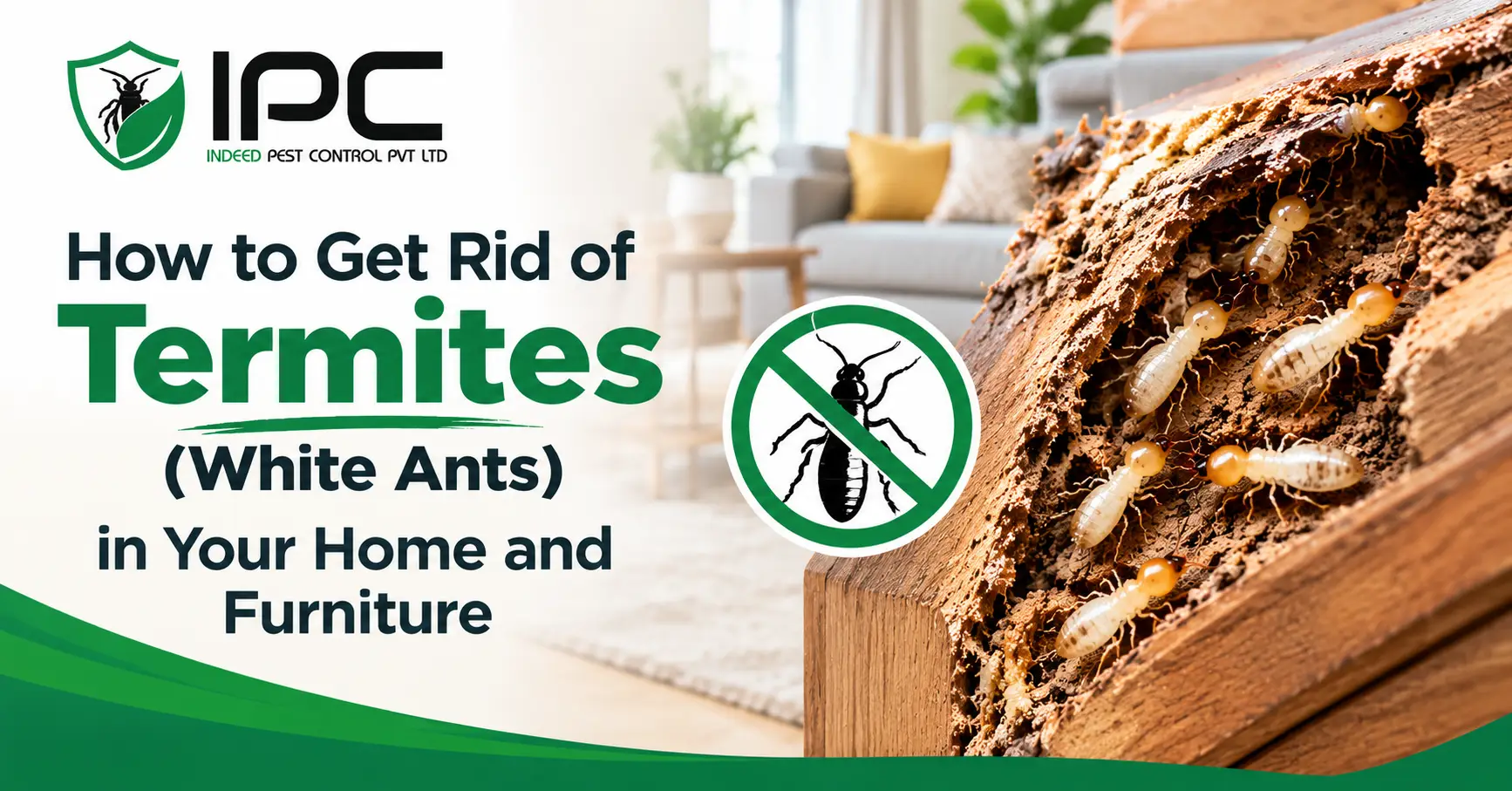
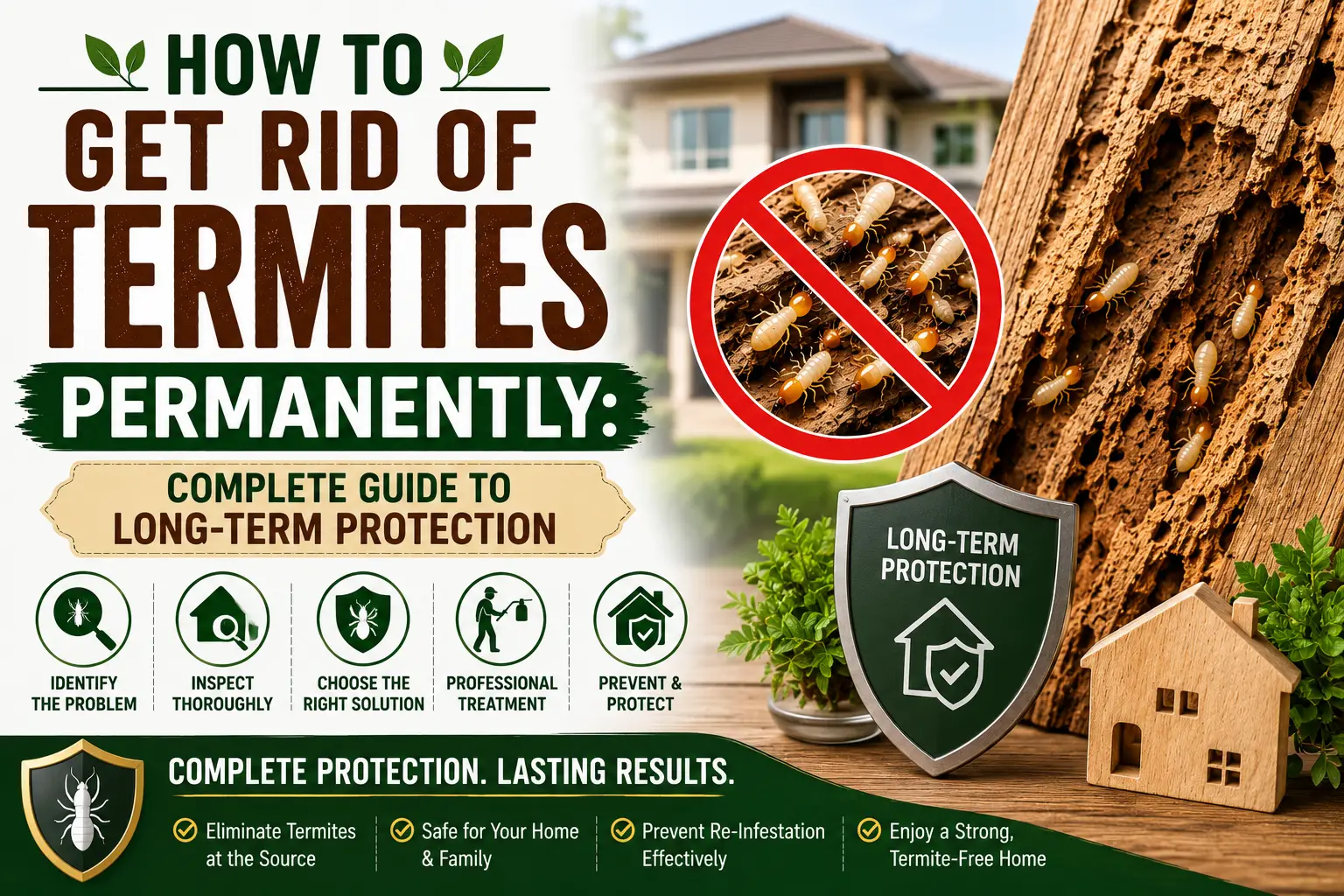
It’s not false to commit that termites are among the most destructive pests on this planet. Silent, relentless, and incredibly organized, they can hollow out the structural timbers of a home over months or years before a homeowner even notices. If you are dealing with an active infestation or simply want to protect your home before termites ever arrive, this article helps you with everything you need to know about how to get rid of termites permanently and the best ways to keep these wood-destroying insects from ever coming back.
Why Termites Are Hard to Eliminate Permanently
Just like cockroaches and rodents, termites are also one of the persistent pests that are very hard to remove if they become comfortable at your place. But unfortunately, like other pests their presence cannot be spotted until some heavy loss is seen. These little white ants create hidden colonies underground or inside walls at a very fast reproduction rate, making permanent termite removal a challenging process. They live inside the wood where no human 6’6 eyesight can detect. That’s the reason dealing with termites is not an easy-peasy job.
Signs of a Serious Termite Infestation
- Mud tubes running along your foundation, walls, or crawl spaces
- Hollow-sounding wood when you tap floors or door frames
- Discarded wings near windows and doors
- Frass (termite droppings) that looks like tiny wood-colored pellets
- Bubbling or peeling paint that resembles water damage
- Tight-fitting doors and windows
How to Get Rid of Termites Permanently (Step-by-Step Guide)
1. Eliminate Moisture Sources
Moisture could be your worst enemy if you haven’t controlled it on time. Everyone needs water to live, so do termites. Even a little bit of moisture is an open invitation for pests like termites. To eliminate their welcoming source, you have to:
- Fix leaky taps and damp areas
- Improve ventilation especially in basements and bathrooms
2. Remove Infested Wood or Material
Termites spread very quickly like bedbugs. If you spot any furniture infested, quarantine it asap before termites reach to other furniture.
- Replace heavily damaged wood because the chances of their survival is likely zero
- Avoid infestation from spreading this room to another
3. Apply Termite Treatments
Mild or initial stage infestations can get treated by using following home remedies:
- Boric acid treatment
- Neem oil solution
- Orange oil application
You can also opt for professional soil termite infestation treatment around home foundation to strengthen the root.
4. Use Physical Barriers
A tiny-mini gap between flooring or walls becomes the grand entrance points for termites. If you want to know how to get rid of termites permanently, you must:
- Seal cracks and entry points
- Install termite-proof mesh or barriers
Natural Methods to Support Termite Control
- Try to locate small infested items or furniture in balconies or terrace to get direct sunlight exposure.
- Vinegar is one of the strongest ingredients like lemon that helps deter pests. Make a solution of vinegar and lemon and spray on the infested area twice or thrice a day.
- Salt calms the termites’ population. Use salt solution injection in infested wood holes, deep penetration helps in delivering quick results.
- Use a cardboard baiting system, one of the oldest natural lurking techniques of permanent termite removal. It’s a little lengthy procedure and requires multiple sessions.
Professional Methods for Permanent Termite Removal
Soil Treatment
A liquid termiticide often fipronil (sold as Termidor) or imidacloprid is applied to the soil around and beneath the foundation of the home, creating a chemical barrier that termites cannot cross. When a termite passes through the treated zone, it picks up the chemical on its body and carries it back to the colony, where it spreads to other termites through grooming and contact. This can eliminate an entire colony, not just the individuals that contact the barrier.
Baiting Systems
Bait stations are plastic cylinders installed in the ground around the perimeter of a structure, filled with cellulose material laced with a slow-acting insecticide. Termites find the bait while foraging, feed on it, and carry it back to the colony.
Wood Injection Treatment
In the initial stage, infested wood can be treated or reversed and that miracle can be done with the help of professional wood injection treatment.
Fumigation
Fumigation involves enclosing the entire structure in a tent and pumping in a gas typically sulfuryl fluoride that penetrates every crack, crevice, and piece of wood in the home. It is the gold standard for drywood termite infestation treatment and is capable of eliminating 100% of active termites within 24 – 72 hours.
How to Prevent Termites from Coming Back
- Annual professional inspections, ideally before monsoon seasons when termite swarms are most active
- Maintaining active bait stations around the perimeter year-round
- Fixing moisture problems by using a dehumidifier
- Renewing liquid barrier treatments every 5 – 10 years, or sooner
- Monitoring mud tubes and wood structures regularly as a DIY check between professional visits
- Removing unnecessary cardboard, paper, and cellulose debris from homes
Common Mistakes That Lead to Reinfestation
- Giving attention to only visible termites and skip its relatives, i.e. hidden colonies.
- Don’t take action immediately. People often delay termite infestation treatment assuming they have much time.
- Hiring the best pest control professionals and applying the high-quality anti-termite treatment but forgot to seal pests’ entry points, making every good effort and premium treatments in vain.
- Not practicing DIY techniques in consistency or quitting so soon. Home remedies need some sufficient time to deliver results, giving up in the middle may worsen the situation.
When DIY Methods Are Not Enough
DIY methods don’t show miracles unless you’re using them correctly. Still, there might be a chance of failure. Large scale infestations cannot go easily and demands professional attention. In persistent cases, start with a professional inspection. Choose a treatment method suited to your specific infestation. Address the moisture and structural conditions that attract termites in the first place. And commit to ongoing annual monitoring so that any new activity is caught and addressed before it becomes a costly problem. For pricing related concerns, contact Indeed Pest Control professionals at and take an initiative to maintain a termite-free society.
FAQs
Q. Can termites be eliminated permanently?
Permanent elimination is the strong word. You can control their colonies from damaging your structure with proper prevention and treatment but cannot eliminate them from the planet as their existence is also natural in the environment.
Q. How long does it take to completely remove termites?
Different treatments require different time periods. Soil treatment takes 1 – 3 months, bait stations 3 – 6 months, fumigation 2 – 3 days, and heat treatment removes termites within a few hours.
Q. What is the most effective long-term termite treatment?
Undoubtedly, heat treatment is considered as the most effective long-term termite infestation treatment as it functions quickly and also the best eco-safe option for families with children.
Q. Do termites come back after treatment?
No, if you’ve chosen the professional technicians from the reputable company, the chances of reinfestation are less likely. However, termites can return if the aftercare hasn’t been done properly like moisture control.
Q. Is professional termite control worth it?
Of course yes, this is the best investment that any homeowner can make to protect the structure of their building. Professionals come with specific expertise that won’t just help create a pristine clean, pest-free environment but also strengthen the foundational root of your property.